This guide compares the seven tools agencies actually use in 2026: Keyword.com, Ahrefs, SEMrush, Google Search Console, SE Ranking, Nightwatch, and AccuRanker. We've ranked each by what it's best for, starting price, and the integrations that matter for client work.
If you want the short version, jump straight to the comparison table below.
What Is an Agency Rank Tracker?
An agency rank tracker is a tool that monitors where a client's website ranks in search engines for a defined set of target keywords. The good ones track rankings across multiple locations, devices, and search engines, then surface that data in a way clients can actually understand.
Agencies use rank trackers for four things:
- Proving SEO progress to clients who don't read raw Google Search Console exports
- Catching ranking drops early before they affect traffic and revenue
- Benchmarking against competitors for the same keyword sets
- Spotting opportunity keywords that are sitting on page 2
Modern rank trackers also track visibility inside AI search engines (Google AI Overviews, ChatGPT, Perplexity, Claude). That's becoming a separate conversation with clients, and a few tools below already cover it.
The 12 Best Agency Rank Trackers in 2026
Prices reflect entry-level annual billing as of May 2026. Always check the vendor’s site for current pricing.
Keyword.com
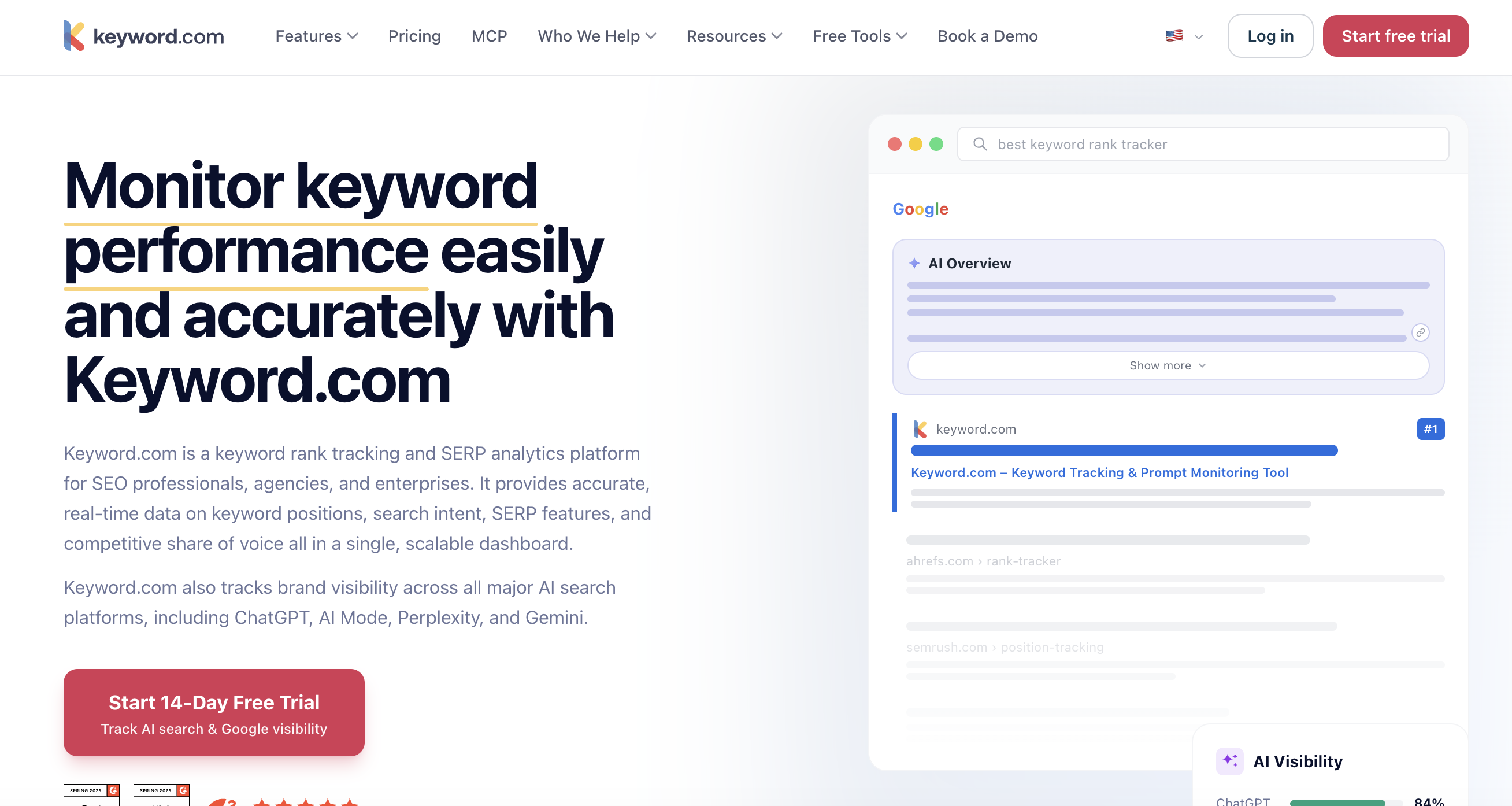
Best for: Agencies that want to track Google rankings and brand visibility across AI search engines in one tool.
Keyword.com is a specialist rank tracker that has expanded into AI search visibility. It tracks Google keyword rankings, then layers on tracking for ChatGPT, Google AI Overviews, Perplexity, Claude, and Mistral mentions.
For agencies whose clients are asking “are we showing up in ChatGPT?”, Keyword.com is one of the more honest answers right now. The AI Rank Tracker and Brand Mention Monitor show when your clients’ brands get cited inside LLM responses.
There's also a Keyword.com Dashthis integration which makes it the cleanest option if you’re consolidating client reports.
- Starting price: $7/month
- Free trial: Yes
- Strengths: Affordable, AI search tracking, native DashThis integration
- Limitations: Lighter on backlink and on-page SEO features than the bigger suites
Ahrefs
Best for: Agencies whose SEO work leans on backlink analysis and competitive research.
Ahrefs is one of the most-used SEO platforms in the industry, and its rank tracker is good, but rank tracking isn’t really the headline feature. The real strength is the backlink database (updated every 15 minutes) and the competitive research tools.
If your clients ask “why is competitor X ranking above us?”, Ahrefs is usually the fastest way to answer.
Keyword difficulty in Ahrefs is sometimes optimistic, so calibrate against your own ranking history. The Lite plan is enough for smaller agencies; the Standard plan unlocks more rank-tracker keywords.
- Starting price: $129/month (Lite plan)
- Free trial: No (Webmaster Tools is free for site owners verifying their own domain)
- Strengths: Best-in-class backlink data, deep competitor research, strong content explorer
- Limitations: Rank-tracker keyword limits per plan, premium pricing
SEMrush
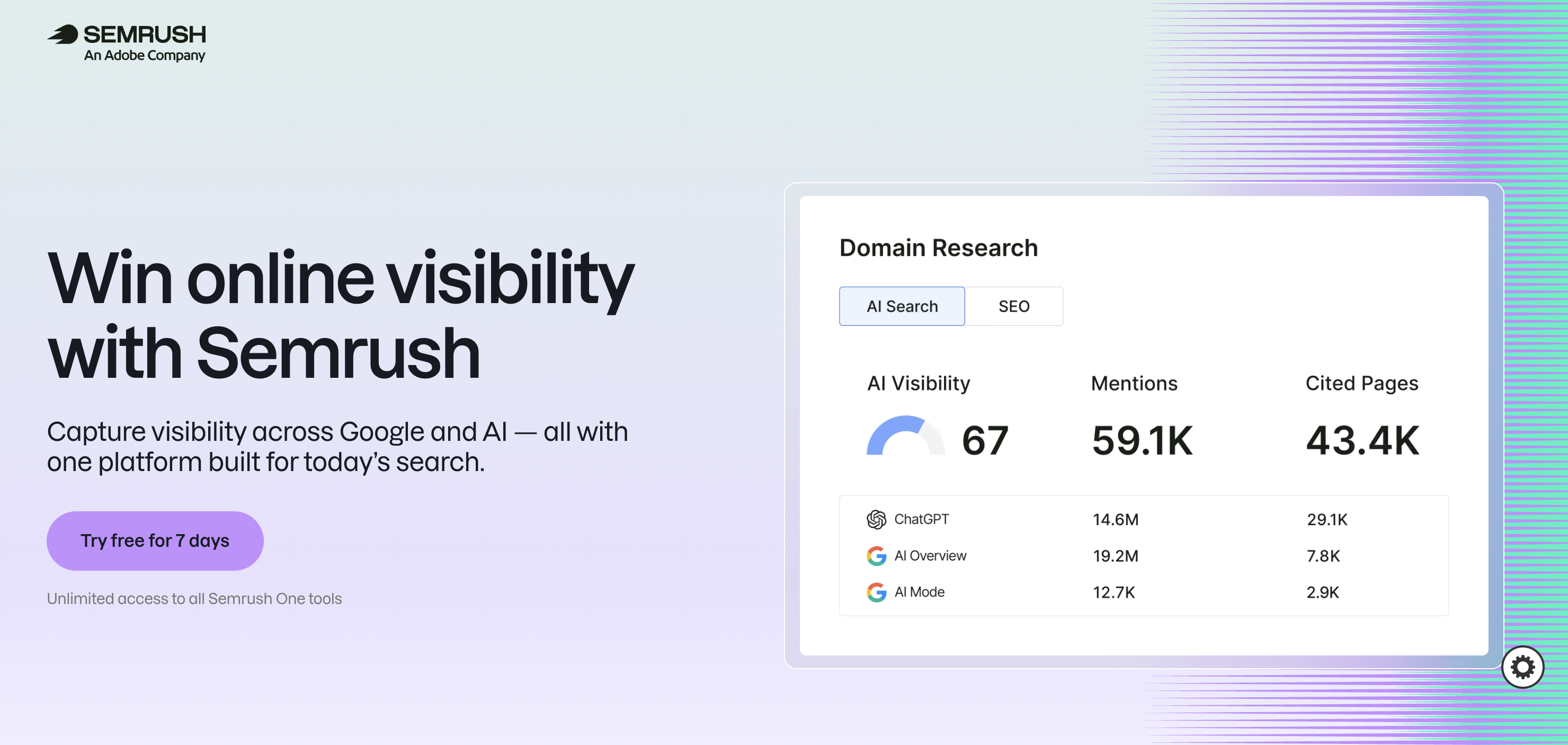
Best for: Competitive keyword research and PPC overlap.
SEMrush is the closest direct competitor to Ahrefs. The Position Tracking tool is solid: daily updates, local rankings, mobile vs desktop, SERP feature tracking. White-label client portals are available as an add-on.
The downside for agencies running multiple clients is that the interface can feel busy. There’s a learning curve, and team-seat pricing climbs quickly.
- Starting price: $140/month (Pro plan)
- Free trial: 7 days
- Strengths: Position Tracking, competitor analysis, broad PPC plus SEO plus content coverage
- Limitations: Steep cost when you add seats, interface can overwhelm new users
Google Search Console

Best for: Free, first-party ranking and impression data straight from Google.
Google Search Console is the only “rank tracker” that gets data directly from Google. It shows average position, impressions, clicks, and CTR for every query your client’s site shows up for, not just the ones you happened to add to a tracker.
The catch is that GSC averages positions across all locations and devices, so it’s not a substitute for a true rank tracker if a client cares about a specific city or device. It also can’t track competitors.
- Starting price: Free
- Strengths: First-party data, every keyword your client appears for, no setup cost
- Limitations: Averaged positions, no competitor tracking, no daily granularity
SE Ranking
Best for: Smaller agencies that want broad SEO coverage without the Ahrefs / SEMrush price tag.
SE Ranking has quietly become one of the more popular agency picks. It covers keyword rank tracking, on-page SEO checks, backlink monitoring, competitor analysis, and white-label reporting in one platform.
Accuracy is generally good. The reporting layer is solid but not as polished as a dedicated reporting tool like DashThis, most agencies pair the two.
- Starting price: $129/month
- Free trial: 14 days
- Strengths: Good value for the feature breadth, white-label, decent integrations
- Limitations: Reporting is functional but less customizable than a specialist platform
Nightwatch
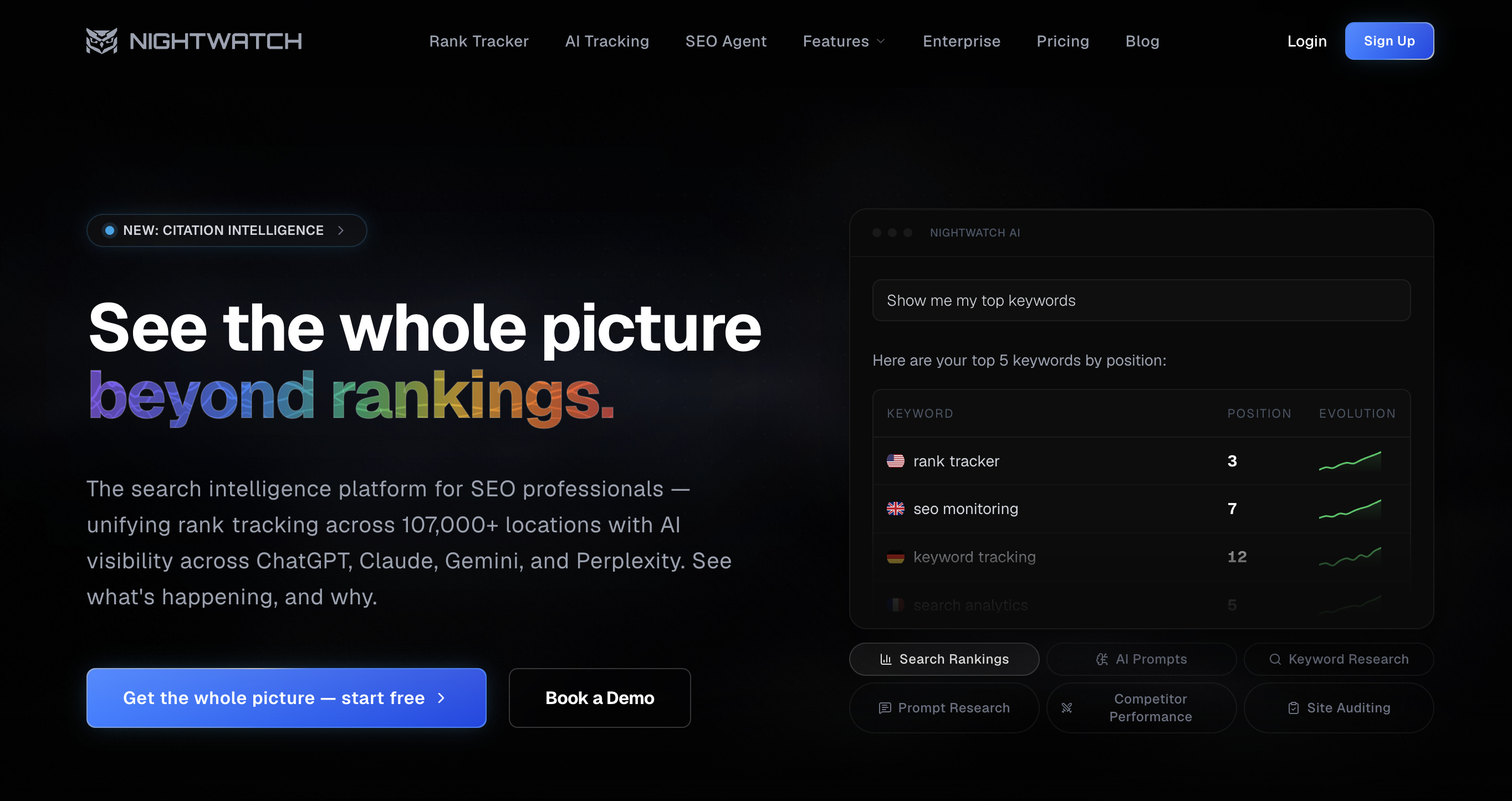
Best for: Granular local rank tracking down to ZIP code level.
Nightwatch is purpose-built for agencies. The UI is clean, rankings update daily, white-label is included, and it tracks Bing, YouTube, DuckDuckGo, and Yahoo alongside Google.
What stands out is the local tracking, you can monitor rankings down to a ZIP code, which is useful for local SEO clients or multi-location businesses.
- Starting price: €99/month
- Free trial: 14 days
- Strengths: Local SEO depth, white-label, multi-engine tracking
- Limitations: Lighter on backlink analysis and competitive research
AccuRanker
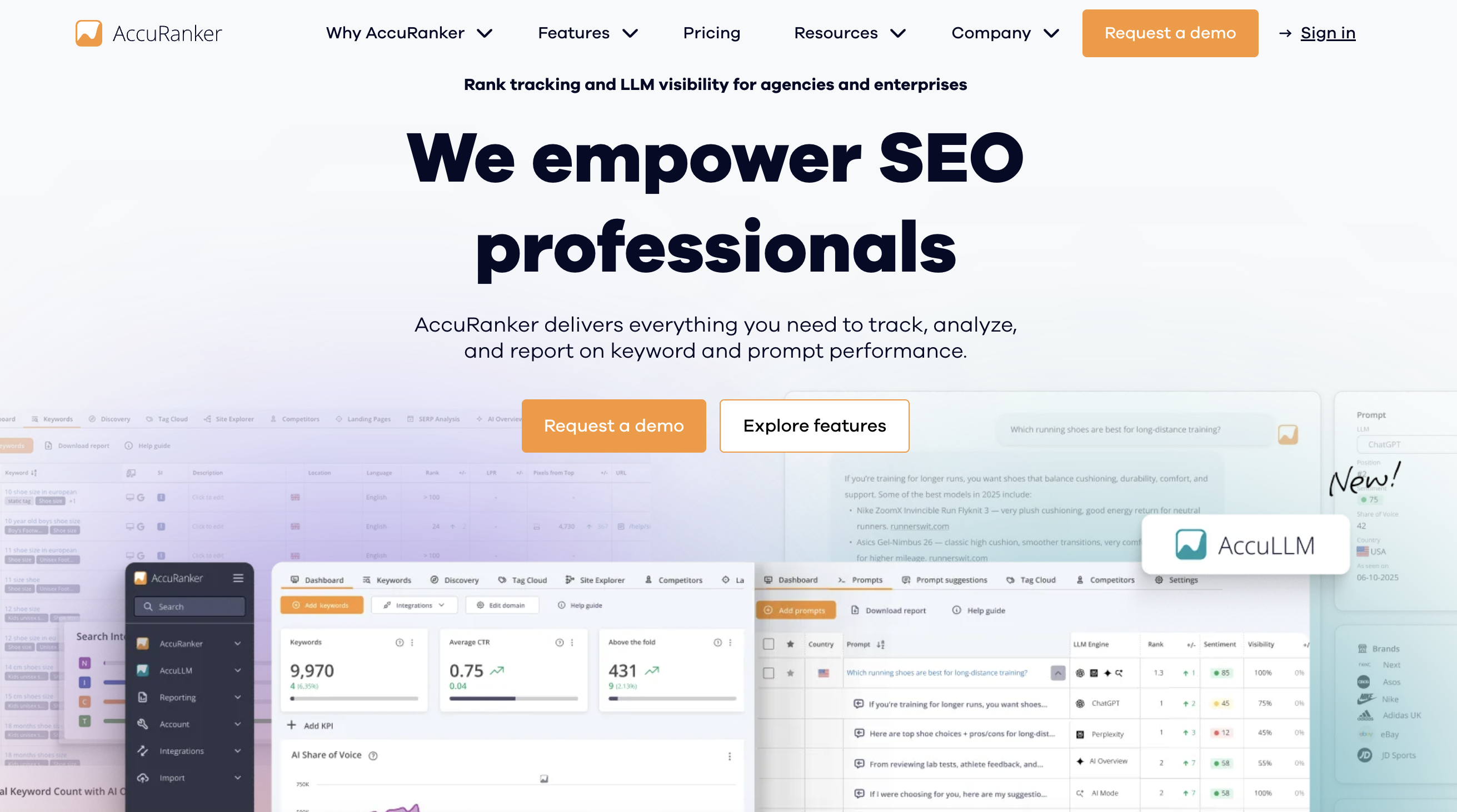
Best for: Agencies that need the highest possible ranking accuracy and on-demand refreshes.
AccuRanker is the rank-tracking specialist most other tools compare themselves to. Updates are fast, accuracy is consistently high, and you can refresh rankings on demand if a client needs same-day data.
Local rank tracking is strong. The downside is price, AccuRanker scales with the number of keywords tracked, which gets expensive for agencies with large client portfolios.
- Starting price: $249/month
- Free trial: 14 days
- Strengths: Best-in-class accuracy, on-demand refreshes, strong local SEO
- Limitations: Pricing scales steeply with keyword count
Advanced Web Ranking (AWR)
Best for: Enterprise and multi-location agencies that need historical depth and flexible reporting.
AWR has been around longer than most tools on this list and remains a favorite for agencies with large keyword portfolios or multi-location clients. It tracks across 3,000+ search engines, supports daily, weekly, or on-demand updates, and offers some of the most flexible white-label reporting in the category.
Where AWR shines is historical data and SERP feature tracking. You can pull years of ranking history, segment by location or device, and surface visibility trends that shorter-term tools miss. The interface feels a bit dated compared to newer tools, but the data layer is hard to beat.
- Starting price: $139/month
- Free trial: All plans come with a 30-day money-back guarantee
- Strengths: Deep historical data, flexible reporting, strong for enterprise and multi-location SEO
- Limitations: Interface shows its age, learning curve for new users
Wincher
Best for: Smaller agencies that want accurate daily rank tracking without paying suite prices.
Wincher is a focused rank tracker that has built a reputation for clean UX and dependable daily updates. It tracks Google rankings across locations and devices, monitors SERP features, and includes basic competitor tracking and keyword research.
There's no backlink analysis or technical SEO module, which keeps the tool focused and the price low. For agencies that already have Ahrefs or SEMrush for the heavy lifting and just want a reliable tracker for client reporting, Wincher is one of the best value picks in the category.
- Starting price: $49/month
- Free trial: 7 days
- Strengths: Affordable, clean interface, accurate daily tracking
- Limitations: Narrow feature set, lighter on competitive and backlink data
Mangools (SERPWatcher)
Best for: Freelancers and small agencies on a tight budget.
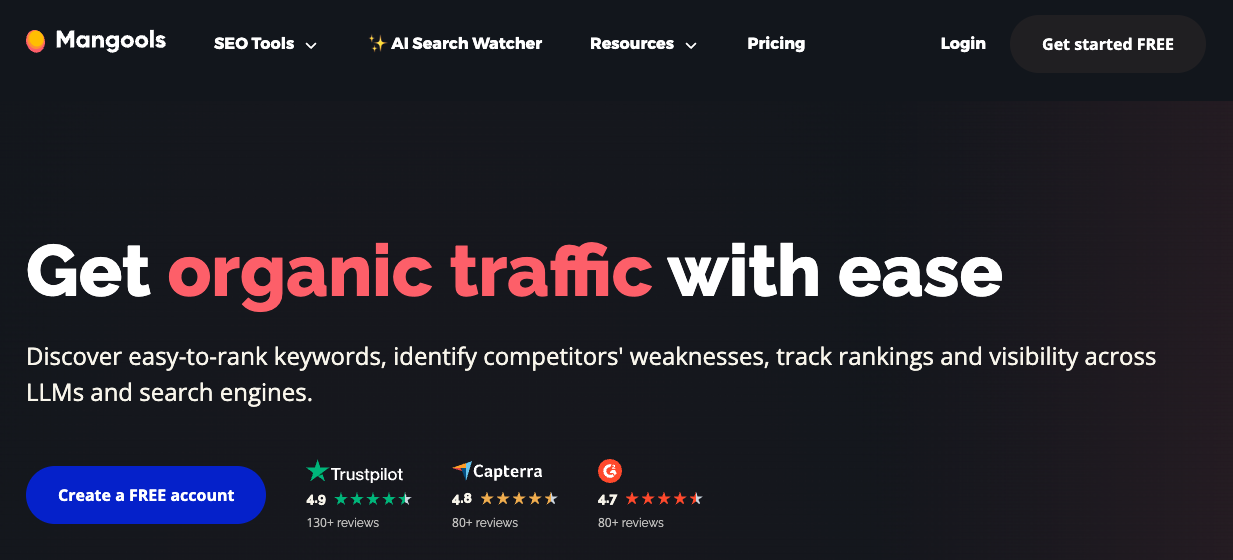
Mangools bundles five tools (KWFinder, SERPWatcher, SERPChecker, LinkMiner, SiteProfiler) into one affordable subscription. SERPWatcher is the rank tracking module, with daily updates, mobile and desktop tracking, and a "Dominance Index" that scores overall visibility.
It's not the most powerful tracker on this list, and agencies with large client portfolios will outgrow it quickly. But for solo SEOs or smaller shops handling a handful of clients, the price-to-feature ratio is hard to beat.
- Starting price: $61/month
- Free trial: 10 days
- Strengths: Affordable, easy to learn, full SEO toolkit included
- Limitations: Keyword limits cap quickly, lighter on enterprise and agency features
Peec AI
Best for: Agencies that want to track and benchmark client visibility across AI search engines.
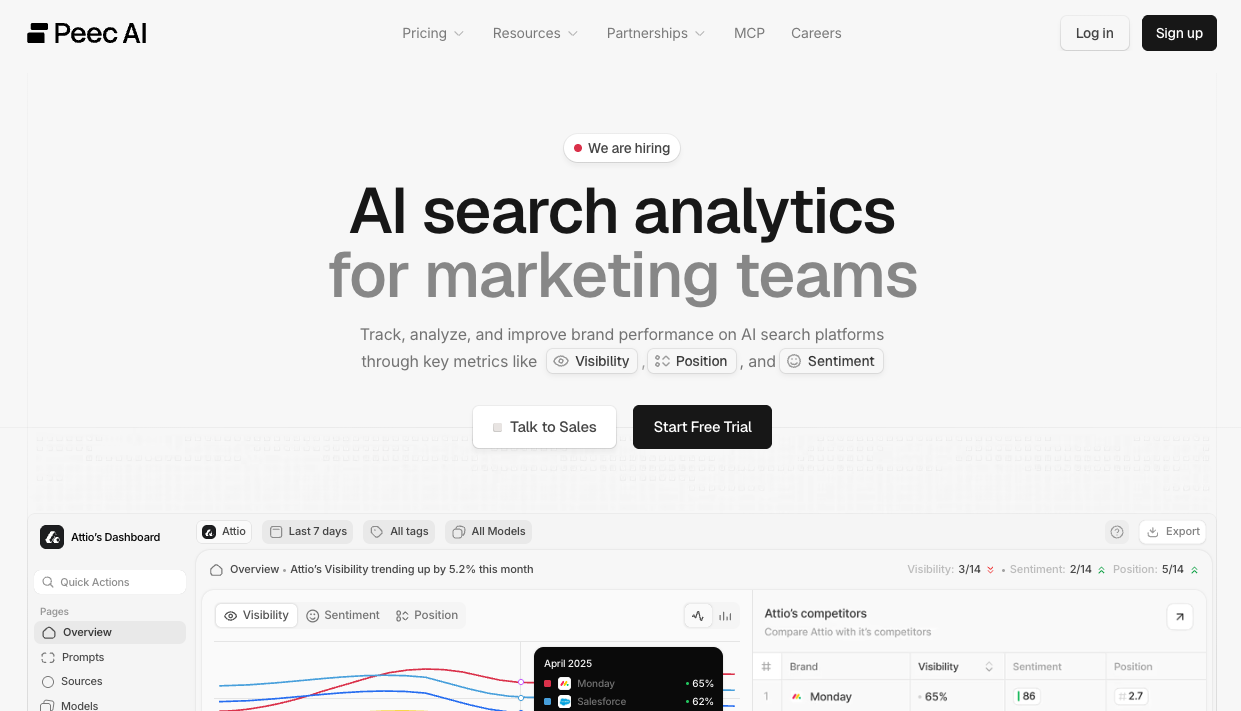
Peec AI is built specifically for monitoring brand presence in LLM responses. It tracks how often your clients' brands get mentioned across ChatGPT, Perplexity, Google AI Overviews, Gemini, and Claude, then benchmarks that visibility against competitors over time.
The tool surfaces which prompts trigger brand mentions, which sources the LLMs cite, and how sentiment trends week over week. For agencies whose clients are starting to ask "how do we show up in AI search?", Peec AI gives you a structured answer with reportable data.
It's not a replacement for a Google rank tracker, but it pairs well with one. Most agencies use Peec AI alongside a traditional tool like Nightwatch or AccuRanker.
- Starting price: $95/month
- Free trial: Yes
- Strengths: Purpose-built for AI search tracking, competitor benchmarking, prompt-level visibility
- Limitations: New category, doesn't replace traditional rank tracking
Profound
Best for: Enterprise agencies that need deep AI search analytics and answer engine optimization data.
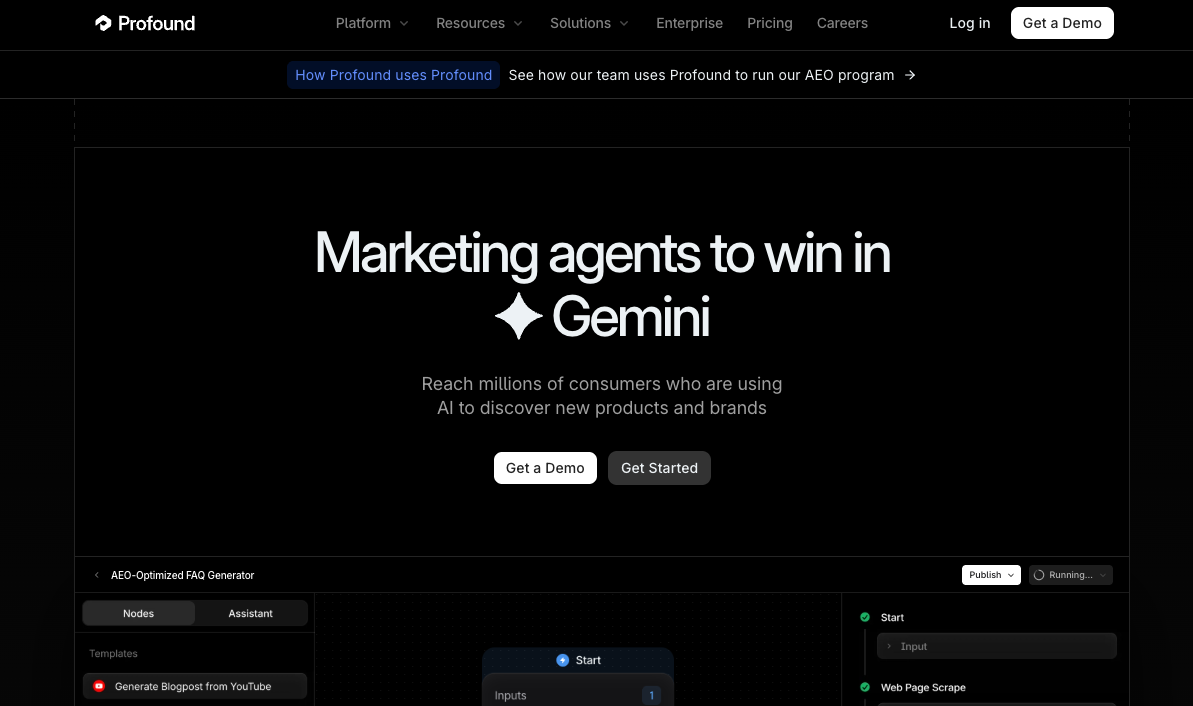
Profound is one of the more established players in the AI visibility space, positioned at the enterprise end of the market. It tracks brand mentions and citations across ChatGPT, Perplexity, Google AI Overviews, Copilot, and other LLM-powered search experiences, with a focus on the data agencies need to actually move the needle.
What separates Profound from lighter AI trackers is the depth of analysis. It shows which content sources LLMs pull from when answering specific prompts, which gives agencies a roadmap for what to publish or pitch in order to get cited. The reporting is polished and built for client-facing use.
Pricing is on the higher end, so it's better suited to agencies with mid-market or enterprise clients than smaller shops.
- Starting price: Custom
- Free trial: Demo available
- Strengths: Deep AI citation analysis, source-level insights, enterprise-grade reporting
- Limitations: Premium pricing, overkill for agencies with smaller client portfolios
How to Choose the Right Rank Tracker for Your Agency
Most agencies overthink this. The decision usually comes down to four questions:
- How many keywords across how many clients? If you’re tracking under 1,000 keywords total, almost any tool on this list works. Above 5,000, you’ll want to look hard at AccuRanker or Nightwatch on volume pricing.
- Local SEO or national? If most of your work is local, prioritize Nightwatch, AccuRanker, or AgencyAnalytics. National-only work gives you more options.
- Backlinks and competitor research matter, or just rankings? If yes, go Ahrefs or SEMrush. If no, a specialist tool is cheaper.
- AI search visibility? If clients are asking, Keyword.com is the most direct answer today. Other tools are catching up.
A note on traditional vs AI rank tracking
For most agencies in 2026, the answer isn't picking between a traditional rank tracker and an AI visibility tool, it's running both.
Google still drives the majority of organic traffic for most clients, so daily rank tracking on a tool like AccuRanker, Nightwatch, or SE Ranking remains the foundation. But the share of searches that end inside an AI response, whether that's an AI Overview, a ChatGPT answer, or a Perplexity citation, is growing fast enough that ignoring it leaves a real blind spot in client reporting.
The cleanest setup for most agencies looks like this: one traditional rank tracker for Google positions and SERP features, one AI visibility tool (Peec AI, Profound, or Keyword.com's AI module) for brand mentions in LLM responses, and a reporting layer like DashThis to pull both data sources into a single client dashboard.
That way, when a client asks "how are we doing in search?", you've got a complete answer, not just half of one.
Bringing Every Rank Tracker Into One Client Report
Most agencies use more than one rank tracker. That’s normal: Ahrefs for backlinks, Keyword.com for daily rankings, GSC for first-party data. The problem starts at reporting time, when you have to pull data from three places, paste it into a deck, and hope nothing breaks before the client meeting.
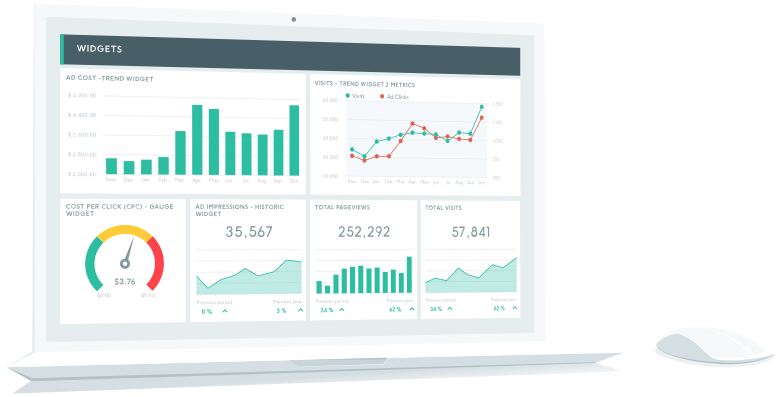
DashThis is the layer above your rank trackers. It connects directly to Keyword.com, Ahrefs, SEMrush, Google Search Console, and 30+ other marketing platforms, then pulls everything into one client-ready report.
What that looks like in practice:
- Client-ready dashboards, refreshed automatically
- Rank-tracker data alongside Google Ads, Meta Ads, GA4, and any other channel you’re reporting on
- White-label branding, scheduled email delivery, and PDF export for clients who like a static report
Agencies tell us they go from 30 minutes per client report to under 10 minutes total across all clients. That’s the practical reason DashThis exists: less time formatting, more time explaining results.
Frequently asked questions