The Marketing Agency's Guide to Setting Client Expectations in 2026

Picture this: you land a new client. The kickoff call is amazing. Everyone's happy.
Then month two rolls around and the client emails asking why they're not ranking yet. Or why their ad spend hasn't 10x'd their revenue.
Sound familiar?
Misaligned expectations are the silent killer of otherwise great client relationships. Not bad work. Not missed deadlines. Just a gap between what was promised (or assumed), what was heard, and what's actually possible.
This guide is for marketing agencies who want to fix that gap before it becomes a problem. We're covering how to set better expectations upfront, keep clients informed throughout the engagement, and use smart reporting tools like Dashthis to make it less stressful.
Why expectation-setting is one of your most underrated agency skills
Most marketing agencies pour energy into their craft: the strategies, the campaigns, the optimization loops. Far fewer invest the same energy into how they communicate about that work.
Here's the thing: expectation-setting isn't just "managing" clients or softening bad news. It's a core part of the service.
When you do it well:
-
Clients feel confident and informed instead of anxious
-
Your team gets the space to actually do great work
-
Retention improves because progress feels visible and real
-
You earn more referrals because happy clients talk
-
You attract better-fit qualified leads (word travels fast in most industries)
When expectations aren't set well, even genuinely great work can feel like a letdown. A client who expected page-one rankings in 60 days won't celebrate a 40% lift in organic traffic the same way a well-briefed client would.
Context is everything.
Real talk: The marketing agencies with the best client retention aren't always doing the most technically impressive work. They're the ones who communicate consistently, report transparently, and treat every touchpoint as a chance to reinforce trust.
Step 1: Set expectations before the contract is signed
This is where the real work happens. Once you're two months into a campaign, it's very hard to reframe what "success" looks like. Get aligned before anything starts.
Be specific about deliverables
Vague promises create vague expectations. "We'll grow your SEO" means nothing. "We'll publish three pieces of content marketing per month targeting these keyword clusters, with expected search engine movement in 90 to 120 days" is a real commitment.
Put your deliverables in writing. Not just what you'll do but why, what it leads to, and what success looks like along the way.
Talk timelines honestly
Digital marketing strategies take time. That's not a caveat; it's just how it works. If a client expects overnight wins from organic SEO or believes social media will generate qualified leads in week one, you need that conversation before the kickoff call, not after.
A few rough benchmarks worth building into your messaging:
-
SEO: meaningful ranking movement usually takes 3 to 6 months minimum
-
Paid ads: optimal conversion rates often take 4 to 8 weeks of testing
-
Social media: consistent organic growth takes 3 to 6 months of iteration
-
Content marketing: compound traffic is real, but the first quarter is slow
-
Email campaigns: list warmth and deliverability take time to build properly
Document these timelines. Include milestones so clients always know where they are on the roadmap.
Have the pricing conversation clearly
Scope creep is one of the fastest ways to damage a client relationship. Pricing conversations are uncomfortable, but they're a lot less uncomfortable upfront than when you're three months in and doing double the work.
Be clear about what's in scope, what triggers a change order, and how you handle it. The right ideal clients will respect the clarity.
Qualify properly
This one's blunt but true: not every prospect is the right fit. Sometimes the best expectation-setting is recognizing early that a client's goals don't match what you can realistically deliver, and saying so.
Chasing partnerships that aren't aligned will cost you more in time and reputation than they're worth.
Step 2: Nail the onboarding moment
The onboarding phase is your best window to reset, align, and get everyone genuinely pointed in the same direction before the real work begins.
A strong onboarding should include:
-
A project roadmap with phase milestones and check-in points
-
A baseline audit of current metrics across SEO, social media, conversion rates, or whatever you're working on
-
A shared definition of success: what does "working" actually mean for this client?
-
Communication workflows: meeting cadence, approval turnarounds, decision-making contacts
-
Live access to a dashboard they can check anytime (we'll come back to this)
Setting up a DashThis marketing dashboard during onboarding is one of the highest-leverage moves you can make. When clients can see their baseline metrics from day one, every future win lands harder. Progress feels real and earned, not abstract.
Pro tip: Send a written summary within 24 hours of every onboarding call. It forces alignment. If something was misunderstood, the written version surfaces it early, before it becomes a bigger problem.
Step 3: Keep expectations calibrated throughout the engagement
Setting expectations once at the start isn't enough. Goals shift. Markets change. Algorithms update. Your job is to keep the conversation going.
Regular touchpoints are non-negotiable
Whether it's weekly check-ins, biweekly calls, or monthly reviews, consistent follow-up prevents small misalignments from compounding into big ones.
Use these calls to walk through progress, flag anything underperforming, adjust marketing strategies if context has changed, and celebrate the wins, especially early ones.
Early wins matter more than you'd think. Clients who see measurable results in the first 30 to 60 days are way more patient during slower phases.
Follow up in writing after important calls
A quick follow-up email after key calls is one of the simplest high-ROI habits an agency can build. It keeps everyone accountable, documents decisions, and kills the "but I thought you said" conversations.
Three to five bullet points covering what was discussed, next steps, and who owns what is usually enough.
Watch for scope and goal creep
Clients evolve. Sometimes their goals shift midway through. That's fine, but it needs to come with an honest conversation about what changes, what stays, and whether the scope or pricing needs to adjust.
Don't let it drift. Address it directly and update the documentation.
Step 4: Use reporting to eliminate anxiety
One of the biggest sources of expectation problems is what we'd call the data black hole: clients don't know what's happening, so they fill the gap with worry.
Real-time, shared reporting fixes this.
What great agency reporting actually looks like
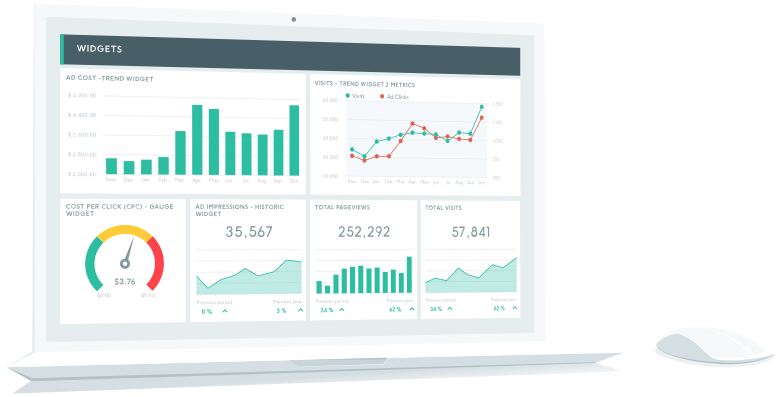
With DashThis, you can build automated marketing dashboards that pull live data from every channel your client cares about, including:
Instead of your team spending hours each week compiling spreadsheets and copying numbers, the dashboards update automatically. Clients can log in anytime, see what's happening across all their digital marketing touchpoints, and never have to wait on a PDF to know where things stand.
What to put in a client-facing dashboard
Keep it focused on the KPIs that actually matter to that specific client. A well-designed client reporting dashboard typically includes:
-
Top-line metrics: traffic, leads, conversion rates, ad spend efficiency
-
Progress against goals: are you hitting the milestones from the roadmap?
-
Channel breakdown: SEO, social media, paid, email campaigns
-
Trend lines: month-over-month and quarter-over-quarter comparisons
-
Notes and context: what do the numbers actually mean?
That last one is critical. A traffic dip caused by a planned site migration looks completely different from an unexplained drop. Your dashboard should make that visible. DashThis lets you add custom notes directly inside reports, so the "why" is always alongside the "what."
The real power of reporting: Clients who can see their data in real-time feel more in control. They ask better questions. They trust you more. And they're far less likely to spiral when one metric dips for a week.
How to handle the tough conversations
Even with perfect expectation-setting, you'll hit moments where results don't match what the client hoped for. Here's how to handle them without losing the relationship.
Lead with the data
When delivering bad news, open with the numbers. Show clients what's happening, not just what happened. Walk them through the metrics in your dashboard, what you've tested, and what's changing. Shared metrics make hard conversations grounded, not defensive.
Own the miss
If something didn't work, say so. Don't spin it. Agencies that are honest about what went wrong build trust, even when the news is uncomfortable. Agencies that spin it erode trust even when they eventually deliver.
Reset when you need to
Sometimes the original goal was wrong, the market shifted, or the client's priorities changed. Use those moments to revisit the roadmap, update the milestones, and recommit to a realistic path.
A re-scoping conversation done well can actually strengthen a client relationship. It shows you're paying attention and thinking beyond just ticking off deliverables.
Expectation-setting in 2026: what's different now
The landscape has shifted. Clients are reading about AI-powered tools, marketing automation, ChatGPT, predictive analytics, and artificial intelligence everywhere. Many arrive with inflated ideas about what's possible and how fast.
Here's what to address proactively.
AI tools are real, but they're not magic
AI-powered optimization and marketing automation genuinely help: faster content creation, smarter ad testing, better audience segmentation, improved workflows. But they still require strategy, judgment, and iteration.
Set clear expectations: AI tools reduce manual work and surface insights faster. They don't replace the strategic thinking that makes digital marketing actually work.
Search has changed, and so have rankings
Search engine results pages look very different in 2026. AI Overviews, zero-click answers, and answer-engine placements mean that traditional rankings don't tell the full story.
Be upfront with clients about this. Ranking #1 means something different than it did three years ago. Organic traffic can look flat even when your SEO strategy is working. Set these expectations early so clients aren't alarmed when the metrics look different from what they expected.
First-party data is now a foundation, not a nice-to-have
With third-party cookies largely gone, first-party data has become core to every serious digital marketing strategy. If your client doesn't have strong data collection in place, that's a baseline you need to establish before meaningful optimization is even possible.
Make it part of your onboarding audit. What data do they have? Where does it live? How is it collected? The answers shape everything.
Automation makes reporting better, not optional
Some clients assume automation means less visibility. Actually the opposite is true.
With tools like DashThis, marketing automation means clients get more visibility, more often, with less manual work from your team. Automated reporting workflows free your team up for strategy and relationship-building instead of formatting spreadsheets. That's a genuine differentiator worth leading with in your agency's messaging.
Build a reputation for honesty and your agency grows itself
Everything in this guide comes back to one thing: trust.
Trust is built when clients feel informed, respected, and confident you're working in their interest. It compounds every time you follow up proactively, share honest data, hit a milestone, or flag a problem before they notice it.
The agencies with the best client relationships invest just as much in communication as in execution. That's where testimonials come from. That's where referrals come from. That's what turns one-off projects into long-term partnerships.
Set strong expectations from day one, back them up with transparent reporting in DashThis, and make honesty one of your agency's most visible differentiators.
Ready to make reporting a competitive advantage for your agency? Try DashThis free and see how automated, real-time dashboards can transform your client relationships.

Create Reports Your Clients Actually Want to Open
Read More

Don’t miss out!
Follow us on social media to stay tuned!


Automate your reports!
Bring all your marketing data into one automated report.
Try dashthis for free